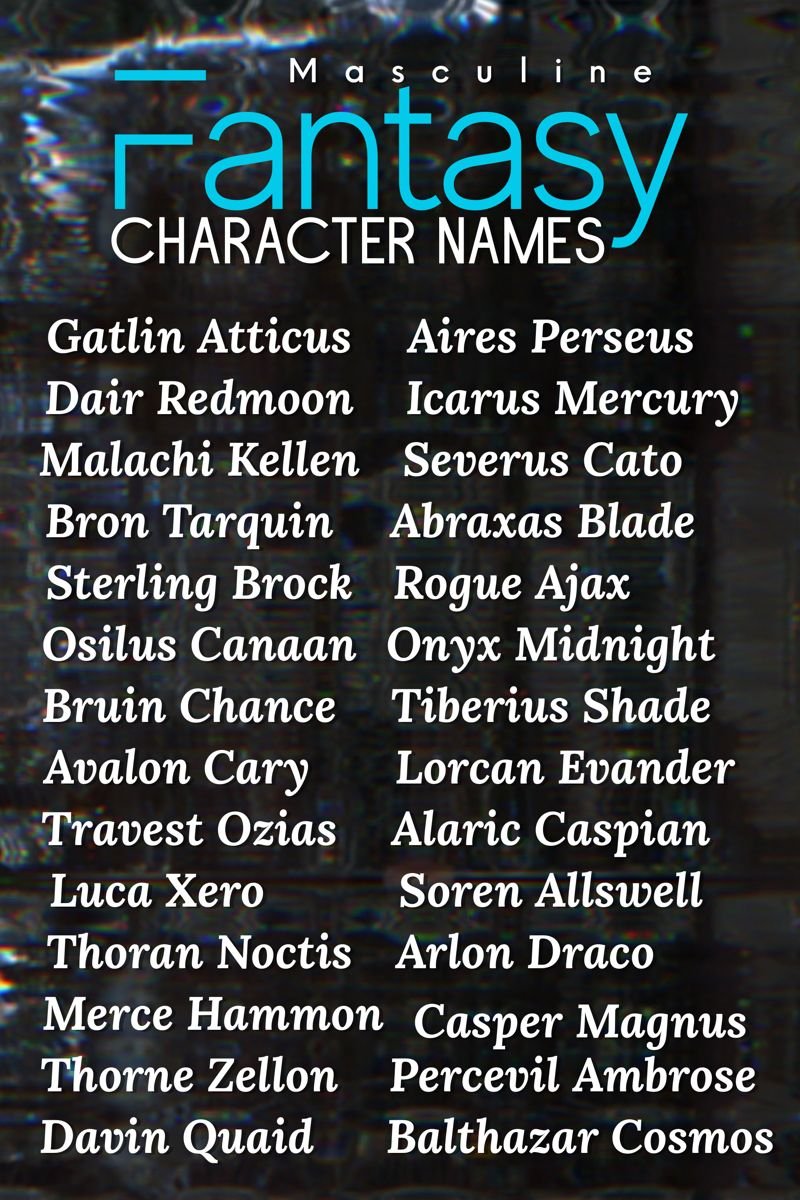
It happens to every storyteller. You’ve got a brilliant world brewing, a compelling plot taking shape, and characters with intricate backstories. But then comes the moment of truth: you need a name. Not just any name, but the perfect one. One that resonates with their personality, hints at their lineage, and effortlessly slots into your fantastical or futuristic setting. This is where Fantasy & Sci-Fi Character Name Generators become an indispensable tool, transforming a potential roadblock into a launchpad for creativity.
Forget endlessly scrolling through baby name lists or staring blankly at a page. Name generators offer a smart, efficient way to kickstart your creative process, providing a wealth of options that align with specific genres, races, and even cultural nuances. Think of them not as a replacement for your imagination, but as a powerful co-pilot, ready to suggest everything from an ancient Elven lord like Ged to a defiant warrior like Azazel, a clever Hobbit such as Bilbo, or a formidable queen like Daenerys.
At a Glance: Your Guide to Naming Excellence
- Generators Are Goldmines: They offer a vast array of unique names, saving you countless hours of brainstorming.
- Context is King: The best names align with your character’s world, culture, and personality. Don't just pick a cool sound; give it meaning.
- Pronounceability Matters: If readers can’t say it, they’ll forget it. Test names aloud!
- Tweak, Don't Just Take: Generators are a starting point. Modify, combine, and personalize results to make them truly yours.
- Consistency Builds Worlds: Establish naming patterns within your world to enhance realism and depth.
The Naming Conundrum: Why Crafting the "Perfect" Name is So Hard
Creating a memorable character name for a fantasy or sci-fi saga is far more challenging than it might appear. It's not just about a string of letters; it's about embedding identity, history, and often, destiny. Authors like J.R.R. Tolkien famously dedicated years to inventing entire languages like Elvish, drawing inspiration from real-world tongues such as Finnish and Welsh, just to build the foundation for names like Gandalf. J.K. Rowling reportedly scoured graveyards for unique monikers that would lend a certain gravitas or quirkiness to her characters. George R.R. Martin's Westeros names often echo Old Norse or Latin, giving them an air of ancient, rugged history.
So, why is it such a high-stakes game?
- Originality vs. Familiarity: You want a name that feels fresh and unique, yet isn't so alien it trips up your reader.
- Worldbuilding Integration: A name needs to sound like it belongs in your specific world. A character from a sprawling desert empire shouldn't have a name that sounds like it came from a bustling spaceport, unless that's part of their unique backstory.
- Character Alignment: Does the name suit the character's personality, role, or even their fate? A fierce dragon like Drogon wouldn't feel right with a delicate, "fair maiden" name.
- Pronounceability & Memorability: Readers need to be able to say the name in their head and recall it easily. Complex spellings or awkward phonetics can pull them out of the story.
- Avoiding Unintended Meanings: A name that sounds perfectly fitting in your invented tongue might accidentally be a real-world joke or obscenity.
The sheer volume of possibilities, coupled with the need for deep consistency, can quickly lead to creative paralysis. This is precisely where a good character name generator steps in.
Unpacking the Magic: How Character Name Generators Work
At their core, fantasy and sci-fi character name generators are sophisticated algorithms designed to produce names based on specific parameters. They aren't just mashing random letters together; they leverage extensive databases and linguistic rules to create plausible and evocative names.
Think of it like this: many generators draw from a vast lexicon of real-world names, linguistic roots, and phonetic structures associated with different cultures, myths, and historical periods. For example, some might use a database of Old Norse sounds for a grim fantasy setting, while others might combine Latin prefixes and suffixes for a regal empire. Some even incorporate elements from invented languages or specific genre tropes.
When you select a genre (fantasy, sci-fi), a race (elf, dwarf, alien), or even a specific cultural style, the generator applies a set of rules:
- Phonetic Combinations: Which sounds tend to go together in a given language or style (e.g., Elvish often has flowing vowels and soft consonants; Orcish might have guttural, harsh sounds).
- Prefixes, Suffixes, and Roots: Generators often mix and match common naming elements. A generator inspired by angelic origins might frequently include "-iel" (like Daniel or Azriel), while another might use specific clan prefixes for dwarves.
- Syllable Structure: The number and arrangement of syllables often contribute to a name's feel.
- Gender Bias: Many generators offer options for male, female, or gender-neutral names, reflecting typical patterns.
For instance, a resource like FantasyNameGenerators.com boasts over 1400 name generators, not just for characters, but for entire worlds—from cities and countries to magic spells and alien flora. This variety allows for incredible specificity, ensuring you find names that truly fit your vision.
More Than Just Random Words: The Different Flavors of Generators
Not all name generators are created equal, nor should they be. The best ones offer specialized options:
- Race-Specific Generators: Need an authentic-sounding Dwarf name? An Elvish name with flowing grace? A gritty Orc name? These generators use specific linguistic rules tailored to established fantasy races.
- Genre-Specific Generators: Sci-fi names often lean towards the technological or alien (e.g., Kaelen, Xylo), while high fantasy names might draw from ancient myth (e.g., Lysander, Seraphina).
- Culture-Inspired Generators: Some generators mimic real-world naming conventions – perhaps an ancient Celtic style for a rugged warrior clan, or a Japanese-inspired name for an honor-bound martial arts society.
- Theme-Driven Generators: Looking for names that sound noble, sinister, playful, or powerful? Some generators allow you to filter by tone or implied meaning.
Beyond the Click: Mastering Your Character Name Generator
A name generator is a tool, not a magic wand. Simply clicking "generate" until something "feels right" often leads to generic or inconsistent results. The real mastery comes in how you use the tool.
Step 1: Lay the Groundwork – Define Your Character and World
Before you even open a generator, answer some critical questions:
- What is your character's race/species? (Human, Elf, Klingon, Android, etc.)
- What culture or region are they from? (A sun-baked desert, a technologically advanced city-state, a forest commune?)
- What is their social standing or role? (Noble, peasant, warrior, scholar, outlaw?)
- What is their personality like? (Brave, cunning, cruel, gentle, wise?)
- Are there existing naming conventions in your world? (e.g., all nobles have multi-syllable names, or names are passed down through generations with a specific prefix). This is where you start to create a rich, believable world around your character.
For example, if your character is a shrewd merchant from a cosmopolitan port city, you might look for names with a slightly exotic but pronounceable flair, perhaps drawing from multiple real-world linguistic influences. If they are a stoic knight from a lineage stretching back millennia, you'd aim for something more traditional and perhaps weighty.
Step 2: Generate with Purpose and Filter Ruthlessly
Now, head to your chosen name generator. Select the most relevant options based on your groundwork. Don't be afraid to generate dozens, even hundreds, of names. The trick is to be a keen editor:
- Scan for the "Spark": Which names immediately catch your eye or ear? Which ones feel right?
- Eliminate the Clunky: Discard anything difficult to pronounce, overly complicated, or just plain awkward.
- Check for Genre Fit: Does it sound like it belongs in a medieval fantasy epic or a cyberpunk thriller?
- Save the Good Ones: Keep a running list of potentials. Often, you'll find a few gems amidst many duds.
Step 3: Test for Pronounceability and Memorability
This step is non-negotiable.
- Say It Aloud: How does it roll off the tongue? Does it sound natural, or does it make you stumble? If you struggle, your readers will too.
- Ask for Feedback: Read your top choices to a friend or fellow writer. Their immediate reaction can be invaluable. Do they remember it? Do they mispronounce it?
- Imagine It in Dialogue: Does it sound natural when another character says their name? Does it fit the rhythm of your prose?
Consider how Brandon Sanderson, known for his intricate worldbuilding, often adapts names. He took inspiration from France for characters like Demoux and Vin, and from Scandinavia for names like Dilaf, Hrathen, and Fjorden, demonstrating how existing linguistic structures can be a powerful springboard.
Step 4: Tweak, Combine, and Customize
Rarely will a generator give you the perfect name right out of the box. Think of the results as raw materials.
- Modify a Syllable: Maybe "Kaelar" is good, but "Kaelen" is better.
- Change a Letter: "Lyra" becomes "Lyras," adding a slightly different feel.
- Combine Elements: Take a prefix from one generated name and a suffix from another. "Elara" + "Thane" = "Elathane."
- Add Apostrophes or Hyphens (Sparingly): While tempting for sci-fi, use these judiciously to avoid making names look convoluted (e.g., Z'ara, Cy-ran).
- Consider Nicknames or Titles: Does "Jon Snow" gain depth from his "Bastard of Winterfell" moniker, or "Daenerys" from her "Stormborn" epithet? A generator might give you a birth name, but you can build on it.
Step 5: The Quick Sanity Check – Avoid Unintended Meanings
Before committing, a quick search on your preferred search engine can save you embarrassment. Type in your chosen name and see what pops up. Does it accidentally mean something ridiculous in another language? Is it the name of a real-world celebrity or product you want to avoid association with? While it's impossible to catch every nuance across all cultures, a quick check can rule out obvious pitfalls.
Advanced Naming Strategies (Even with a Generator)
Leveraging a name generator doesn't mean sacrificing depth. In fact, it frees you to focus on the deeper layers of character naming.
Consistency is King: Building Naming Patterns
One of the hallmarks of great worldbuilding is consistent naming. This doesn't mean every name sounds the same, but that within specific families, regions, or social groups, there are recognizable patterns.
- Familial Prefixes/Suffixes: Think of George R.R. Martin's Lannisters, where "Ty-" (Tyrion, Tywin) is a common prefix. Or "Stark" children often having straightforward, hardy names.
- Regional Accents: Names from a particular desert region might have distinct guttural sounds or repeated vowels, while those from an icy tundra might feature harsh consonants.
- Occupational Names: In some worlds, a name might denote a craft or role (e.g., "Stonehand" for a smith).
- Lineage & Legacy: Some names are clearly ancient, passed down through generations, while others might be newer, reflecting a cultural shift.
By generating several names for a particular faction or family, you can identify these patterns and then apply them across other characters from that group, even if you hand-craft their names later.
Sound Symbolism: Matching Name to Personality
The very sound of a name can subconsciously convey personality traits. This is known as "sound symbolism" or "phonetic symbolism."
- Harsh Consonants (K, G, Z, D, T): Often evoke power, danger, strength, or rigidity. Think "Korg," "Grak," "Drogon."
- Soft Consonants (L, M, N, S, V, F): Can suggest gentleness, fluidity, wisdom, or calmness. Think "Lyra," "Seraphina," "Valen."
- Long Vowels: Can create a sense of grandeur or sorrow (e.g., "Aethelred").
- Short Vowels: Often imply speed, sharpness, or simplicity (e.g., "Pip," "Grit").
When using a generator, pay attention to the phonetic feel of the names it produces. Does "Xylos" sound like a cunning rogue, while "Elara" sounds like a wise healer? Trust your gut feeling.
Drawing from Real-World Inspiration (Without Plagiarism)
Many authors, including Tolkien, Martin, and Sanderson, borrow and adapt from real-world languages and cultures. You can too, using generators as your starting point.
- Mythology & History: Look to ancient Greek, Roman, Norse, Celtic, Egyptian, or even biblical names for inspiration (e.g., Azazel, often seen as a demonic name, has biblical roots).
- Linguistic Roots: Familiarize yourself with common prefixes and suffixes from different languages (Latin, Greek, Sanskrit, Old English, etc.) that can be combined in novel ways.
- Foreign Words: Sometimes a foreign word for a concept (e.g., "shadow," "star," "dream") can be adapted into a compelling name.
- Cultural Naming Structures: Observe how names are constructed in different cultures – the use of patronymics, matronymics, or descriptive elements.
A generator can often blend these influences, giving you names that feel grounded and rich without being directly copied.
Integrating Lore and Language: When a Name Has Meaning
The deepest names aren't just sounds; they carry meaning within your world's lore.
- Prophetic Names: A character might be named "Lightbringer" from birth, hinting at their destiny.
- Descriptive Names: A name could translate to "Forest-Walker" or "Iron-Heart" in an ancient tongue, telling a story about their lineage or traits.
- Honorifics & Titles: Beyond their given name, characters might earn titles that become synonymous with them (e.g., Jon Snow's "King in the North").
While a generator won't typically provide the meaning in your invented language, it can provide the framework. You can then assign meaning to a generated name, giving it a deeper resonance within your narrative.
Common Pitfalls to Sidestep
Even with the best tools, it's easy to stumble. Watch out for these common errors:
- The "Keyboard Smash": Names like "Xyl'thar'ok" or "Qwrtyuio" might look edgy, but they're usually impossible to remember or pronounce. Minimalism and careful phonetics often win.
- Generic "Fantasy" or "Sci-Fi" Names: Some generators, especially less sophisticated ones, can produce names that feel blandly generic, lacking any real flavor or cultural identity. This is why filtering and tweaking are crucial.
- Inconsistent Naming Within a Group: Giving one elf a name like "Aerion" and another "Bob" immediately breaks immersion. Maintain the chosen style for related characters.
- Too Many Similar-Sounding Names: If your cast includes "Kaelen," "Kalan," and "Kaylin," readers will struggle to keep them straight. Vary the starting letters and phonetic structures.
- Accidental Comedy: Be mindful of modern slang or pop culture references that your otherwise serious fantasy name might unintentionally evoke.
Beyond Characters: Other Naming Needs for Your Epic
Character names are just the beginning. A compelling world requires names for everything: locations, factions, creatures, spells, technologies, and even generate country names. Fortunately, the principles you apply to characters also extend to other aspects of your worldbuilding.
- Locations: Cities, forests, mountains, planets. Do they sound ancient, technological, natural, or imposing?
- Factions/Guilds: The "Crimson Blades," "Starfall Collective," "The Silent Hand." Their names should reflect their purpose and ethos.
- Creatures/Races: Does your alien race sound menacing or benevolent? Does your fantasy beast have a name that inspires awe or terror?
- Magical Artifacts/Spells/Technology: "The Orb of Eldoria," "Quantum Entanglement Device," "Fireball Barrage." These names need to evoke their function and power.
Thinking about all these elements together helps create a cohesive and believable setting. For example, when you're busy trying to designing a compelling magic system, you'll need names for its spells and components. Similarly, as you explore various character archetypes, consider how their names might reflect common tropes while still feeling fresh. If you're envisioning a high-tech future, you might also need some inspiration for futuristic technology concepts—and names for them, of course!
Choosing the Right Generator for Your Epic Tale
With so many options out there, how do you pick a reliable name generator?
- Variety and Specificity: Does it offer a wide range of genres, races, or cultural styles? The more specific, the better.
- Customization Options: Can you specify gender, starting letters, number of syllables, or even combine different styles?
- Quality of Results: Generate a few names. Do they sound plausible and unique, or bland and repetitive?
- User Interface: Is it easy to use and navigate?
- Additional Resources: Does the site offer other tools or guides to help with worldbuilding?
Ultimately, the best generator is the one that sparks your creativity and helps you find those perfect names without overwhelming you.
Your Next Steps to Naming Mastery
Naming your characters is an art, but it doesn't have to be a struggle. With the right tools and strategies, you can imbue your story with names that are not only memorable but also rich with meaning and perfectly suited to your meticulously crafted worlds.
So, go ahead. Define your character, select your parameters, generate some names, and then lean into the exciting process of tweaking and refining. The perfect name isn't just waiting to be discovered; it's waiting to be crafted. Your readers will thank you for it.